
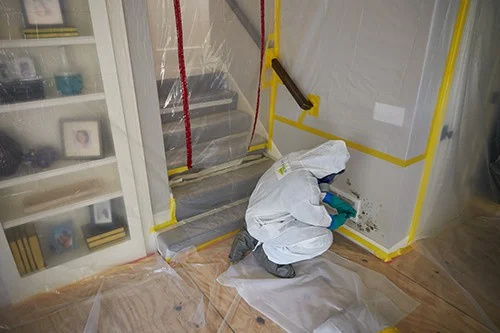
Ask whether steam leaves the room effectively
A running fan does not necessarily establish adequate extraction. Note how long surfaces remain wet and ask a qualified trade about any duct or fan issue. Compare those observations with rainfall-related dampness so a leak is not overlooked while attention stays on shower steam.
Check extraction rather than only opening a door
A fan needs to move air effectively and discharge appropriately. A room that stays wet long after use deserves attention to extraction, make-up air and drying. A qualified trade can assess ducting or electrical issues; do not dismantle a powered fan yourself.
Inspect the coating and substrate
Blistering paint, soft board or water stains change the treatment question. Cleaning a sound coating is different from treating a damaged ceiling. Explain any past repainting and whether previous marks were covered rather than investigated.
Agree safe access before work
Bathrooms combine slippery surfaces, awkward overhead access and electrical fittings. Discuss preparation with the team instead of balancing on a bath or shower screen. Any suspected electrical hazard needs a suitably qualified person before cleaning starts.
Planning the next step in Sydney
In a Sydney property, a leak and a cold damp corner may need different investigations even when the visible marks look similar. Keep dated photographs and explain when the issue changes. Local treatment planning should be based on those observations, not a suburb name alone.
Discuss your Sydney property
Tell us your suburb, the affected materials and whether there has been water damage. We can discuss an appropriate next step for building-related mould concerns.
Mould inspection · Mould cleaning · Mould remediation
Discuss your property ↗