
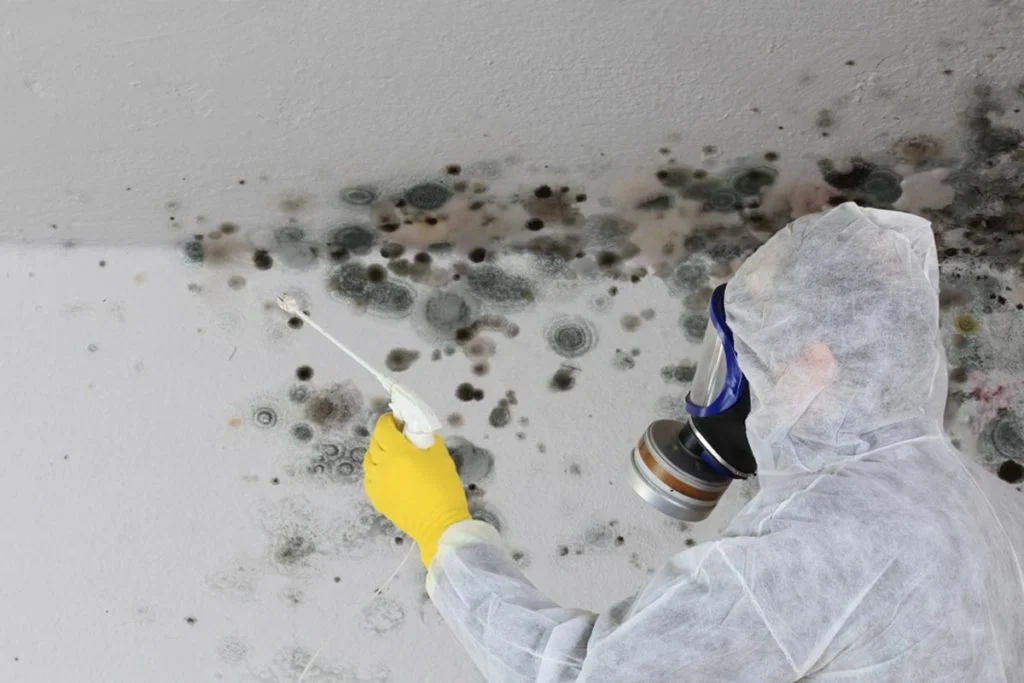
Describe the exact shower location
Marks on the screen track, wall tile and silicone bead can require different decisions. Send photographs that show the whole shower and the affected joint. Explain any leak into a neighbouring room so a treatment discussion does not stop at the most visible stain.
Separate tiles, grout and silicone
A shower has several materials, not one uniform washable surface. Marks on glazed tile may be handled differently from discolouration embedded in porous grout or silicone. Deteriorated sealant can require replacement after the underlying condition has been assessed.
Follow the water path
Check where water remains after use: corners, the screen track, grout joints and the junction with the tray. A damp neighbouring wall or repeated leak requires investigation beyond the shower surface. Cleaning does not substitute for a waterproofing or plumbing repair.
Use one compatible product at a time
Read the product label and surface-care guidance before applying a cleaner. Never combine bleach with vinegar, acids or ammonia. A shower-cleaning routine should not involve improvised mixtures or extra concentration to speed up a result.
Planning the next step in Sydney
Tell the Sydney team whether you own, manage or occupy the affected property and which spaces can be accessed. Share the condition of nearby walls and storage areas where relevant. Contents-care work may need a specialist cleaner separately from a building mould assessment.
Discuss your Sydney property
Tell us your suburb, the affected materials and whether there has been water damage. We can discuss an appropriate next step for building-related mould concerns.
Mould inspection · Mould cleaning · Mould remediation
Discuss your property ↗