
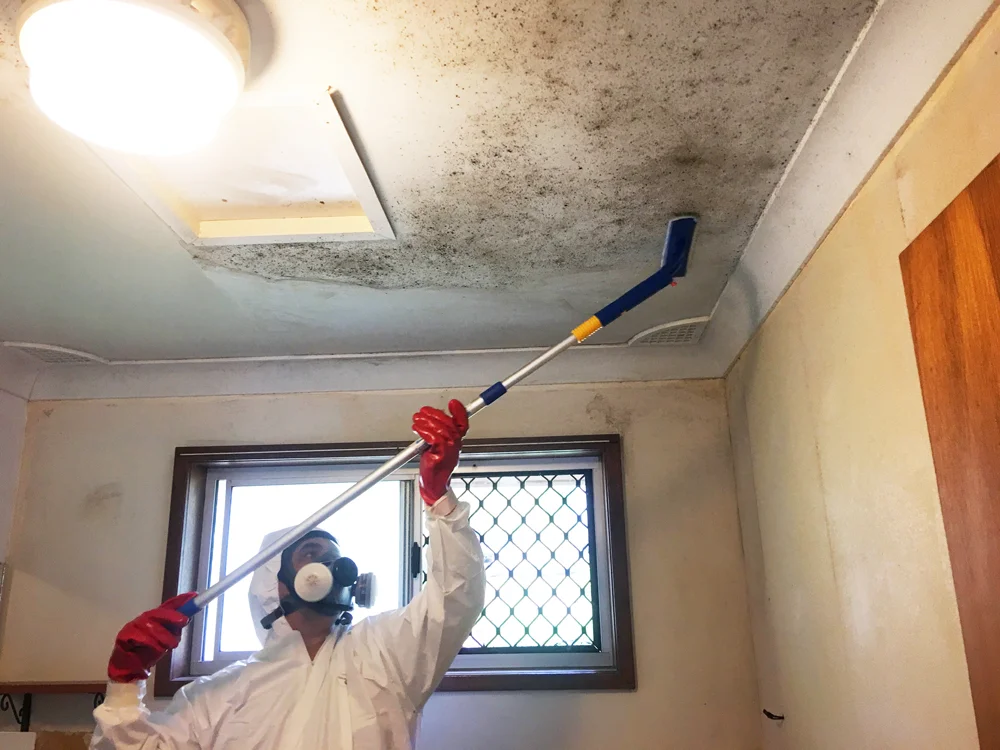
Do not identify a ceiling growth by colour alone
A dark patch should be assessed with its surface condition and moisture history. Photograph the whole ceiling and note peeling, softness or past water staining. Ask whether a ceiling or roof-space inspection is needed and what would make sampling useful to the treatment decision.
Keep treatment and prevention connected
Discuss preparation, cleaning or material removal and any source repairs that need another trade. Review the conditions after treatment rather than relying only on the change in visible colour. The next step depends on what the assessment finds.
Colour does not identify the species
Dark growth can have different causes and appearances. A photograph cannot establish a species or the extent within a material. Concentrate on the affected area, moisture history and condition rather than assuming that every black patch has the same identity.
Inspect the surface and the moisture history
Record where the growth appears and whether it follows rainfall, condensation or a plumbing leak. A damaged wall, ceiling or porous furnishing can need a different scope from a sound hard surface. Recurrent growth warrants a closer look.
Planning the next step in Sydney
In a Sydney property, a leak and a cold damp corner may need different investigations even when the visible marks look similar. Keep dated photographs and explain when the issue changes. Local treatment planning should be based on those observations, not a suburb name alone.
Discuss your Sydney property
Tell us your suburb, the affected materials and whether there has been water damage. We can discuss an appropriate next step for building-related mould concerns.
Mould inspection · Mould cleaning · Mould remediation
Discuss your property ↗