
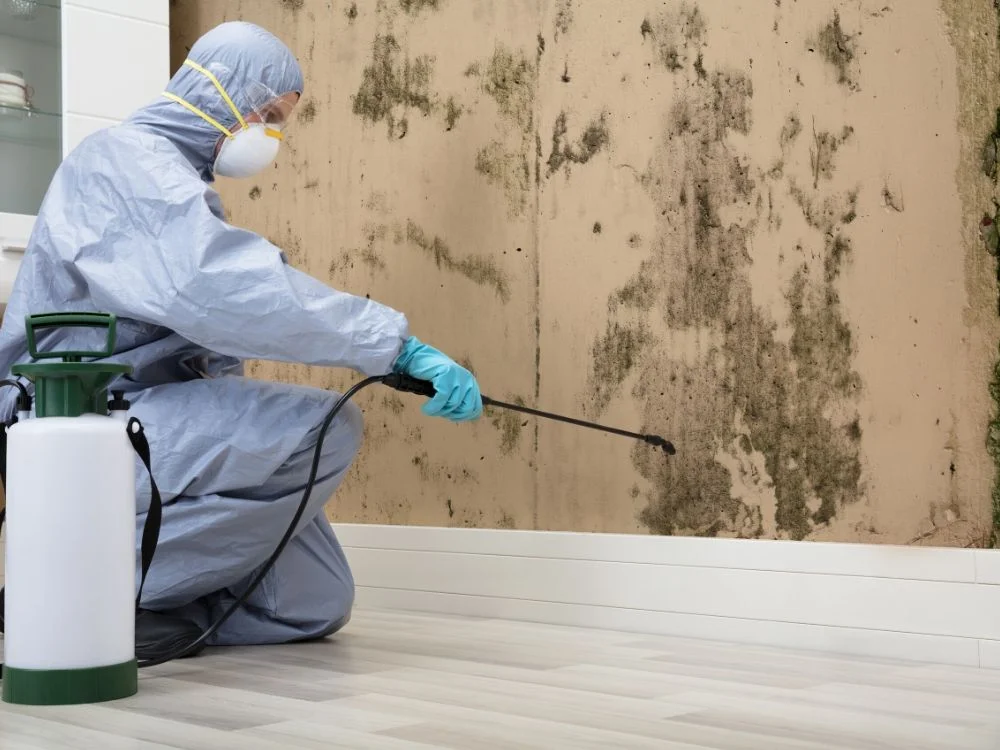
Start with the visible extent
Before choosing a treatment, note whether the growth is a small localised patch, affects multiple surfaces or follows water damage. Those are different assessment briefs. Tell the team about access and previous cleaning so the initial discussion addresses the property rather than just the colour of the stain.
Colour does not identify the species
Dark growth can have different causes and appearances. A photograph cannot establish a species or the extent within a material. Concentrate on the affected area, moisture history and condition rather than assuming that every black patch has the same identity.
Inspect the surface and the moisture history
Record where the growth appears and whether it follows rainfall, condensation or a plumbing leak. A damaged wall, ceiling or porous furnishing can need a different scope from a sound hard surface. Recurrent growth warrants a closer look.
Decide whether testing has a purpose
Not every visible area needs sampling before treatment. Ask what a test would establish, how the result would affect the work and whether it is included in the quote. Useful evidence should support a decision about the property.
Planning the next step in Sydney
For a Sydney enquiry, include the suburb, affected rooms and any recent water event. A house, apartment and shared building can have different access arrangements. Explain those details before a visit so the proposed assessment addresses the relevant surfaces and any restrictions.
Discuss your Sydney property
Tell us your suburb, the affected materials and whether there has been water damage. We can discuss an appropriate next step for building-related mould concerns.
Mould inspection · Mould cleaning · Mould remediation
Discuss your property ↗