
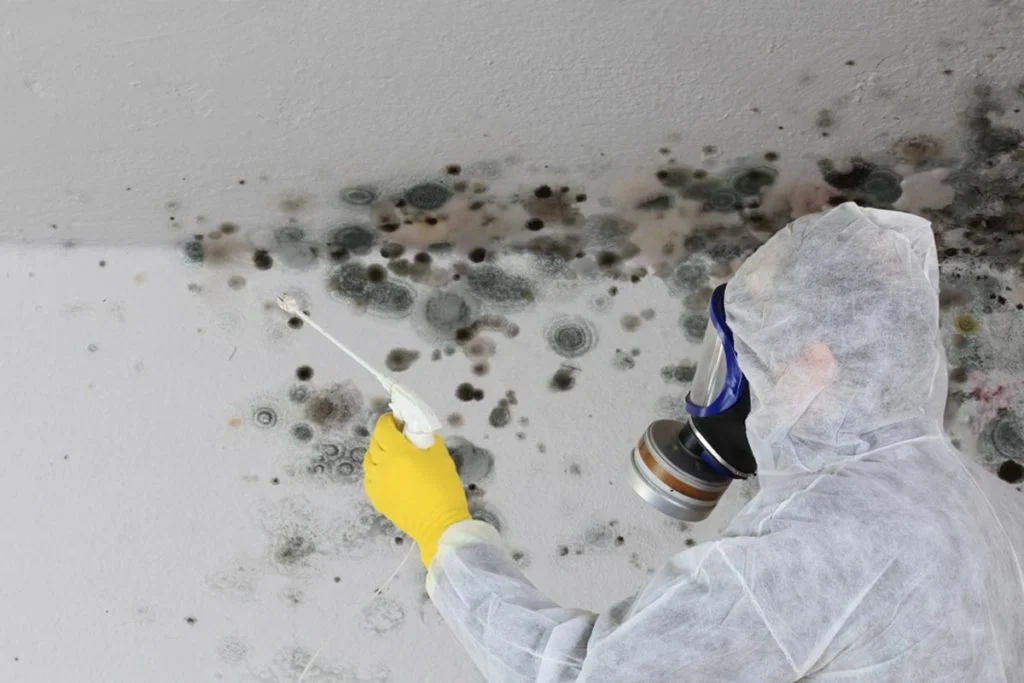
Compare recurrence with the water pattern
Record which joint darkens again and whether water remains there between uses. Include any previous resealing and the condition of the neighbouring wall. A recurring stain can justify a broader assessment rather than another application of a stronger product to the same corner.
Use one compatible product at a time
Read the product label and surface-care guidance before applying a cleaner. Never combine bleach with vinegar, acids or ammonia. A shower-cleaning routine should not involve improvised mixtures or extra concentration to speed up a result.
Make drying part of the routine
Remove standing water where practical and allow extraction to run as needed to dry the room. Keep products and stored objects from trapping moisture against affected corners. Inspect repaired joints as well as the places that were visibly stained.
Recognise when treatment is incomplete
A lighter stain does not show whether dampness remains behind the joint. Recurring marks, soft adjacent walls or failed sealant are reasons to discuss assessment. Photograph the same junction before and after work to track what changed.
Planning the next step in Sydney
Tell the Sydney team whether you own, manage or occupy the affected property and which spaces can be accessed. Share the condition of nearby walls and storage areas where relevant. Contents-care work may need a specialist cleaner separately from a building mould assessment.
Discuss your Sydney property
Tell us your suburb, the affected materials and whether there has been water damage. We can discuss an appropriate next step for building-related mould concerns.
Mould inspection · Mould cleaning · Mould remediation
Discuss your property ↗