
Identify the shoe construction
Canvas, synthetic mesh, suede and smooth leather need different guidance, and the lining or insole may be affected too. Check the maker care instructions and ask a specialist about materials that cannot be washed. A surface wipe is not an assessment of internal padding or a persistent odour.
Identify fibres, coatings and care restrictions
Fabric can include washable fibres, dry-clean-only material, dyes, laminated backings and water-resistant treatments. A cleaning approach must suit the whole construction. If the label is unavailable, ask a specialist before applying a household chemical.
Separate stain appearance from material condition
Dark marks can remain after a treatment, while a faded mark does not demonstrate that an item is suitable to retain. Consider odour, damage, inaccessible layers and the purpose of the item as well as visible discolouration.
Avoid dispersing contamination through the house
Do not shake or dry-brush mouldy textiles around occupied rooms. Ask the receiving cleaner how the item should be handled and transported. Keep affected material separate from unaffected belongings while its condition is assessed.
Planning the next step in Sydney
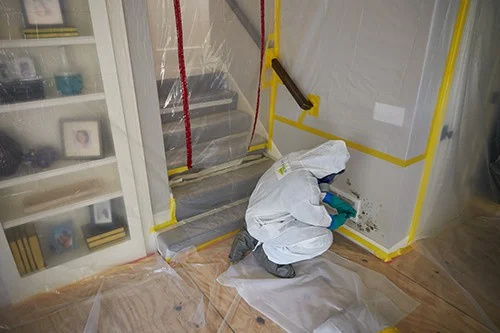
In a Sydney property, a leak and a cold damp corner may need different investigations even when the visible marks look similar. Keep dated photographs and explain when the issue changes. Local treatment planning should be based on those observations, not a suburb name alone.
Discuss your Sydney property
Tell us your suburb, the affected materials and whether there has been water damage. We can discuss an appropriate next step for building-related mould concerns.
Mould inspection · Mould cleaning · Mould remediation
Discuss your property ↗