
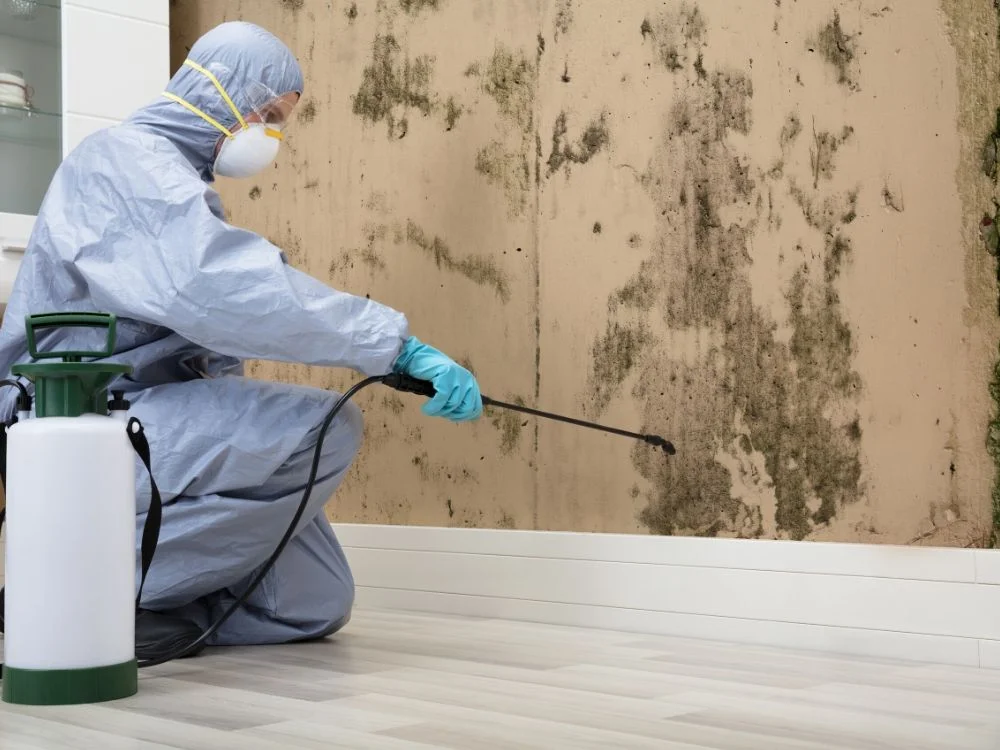
Record overnight conditions and recent water events
Explain whether marks appear after cold nights, wet weather or a known roof repair. Include where the bed, wardrobe and external wall sit in relation to the patch. Any cleaning proposal should account for overhead access and occupancy instructions before the room is used for sleeping again.
Separate condensation from water ingress
A patch across a cold ceiling and a concentrated mark beneath a roof leak call for different investigations. Record whether the area changes after rain, overnight or following use of an adjoining bathroom. A pattern helps explain the problem but is not proof of its cause.
Check the ceiling material before treatment
Painted plasterboard, plaster, concrete and textured finishes react differently to moisture and cleaning. Softness, sagging, peeling or spreading water marks need assessment before a surface treatment. Do not scrape or sand unknown older coatings to investigate them.
Plan access and the cleaning scope
Overhead work adds access and splash concerns. Discuss ceiling height, nearby lights and whether furniture needs protection or relocation. Do not stand on furniture or spray around electrical fittings. The proposed scope should identify surfaces that can be cleaned and materials requiring further investigation.
Planning the next step in Sydney
For a Sydney enquiry, include the suburb, affected rooms and any recent water event. A house, apartment and shared building can have different access arrangements. Explain those details before a visit so the proposed assessment addresses the relevant surfaces and any restrictions.
Discuss your Sydney property
Tell us your suburb, the affected materials and whether there has been water damage. We can discuss an appropriate next step for building-related mould concerns.
Mould inspection · Mould cleaning · Mould remediation
Discuss your property ↗