
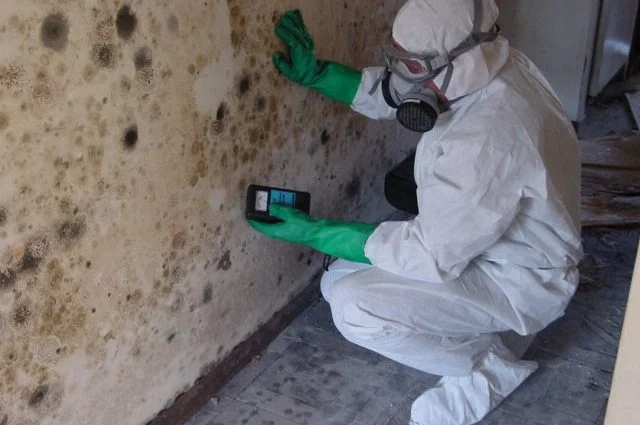
Match the advice to the material
An internet recommendation may concern a small compatible hard surface, while your concern involves porous board, fabric or a natural-stone surround. State the material and condition when seeking advice. The treatment decision should consider those differences rather than assume that one household product suits them all.
Keep different products separate
Do not mix vinegar with bleach or apply it over chlorine-cleaner residues. Combining chemicals is not a reliable way to improve treatment. If the material or previous cleaner is unknown, ask for specific guidance before continuing.
Look past the visible mark
A surface treatment cannot establish the condition behind paint, within a lining or inside a wet porous material. A stain becoming lighter does not show that the moisture source has been corrected. Record recurrent areas rather than repeatedly treating the same patch.
Decide when an inspection adds value
A recurring, extensive or unexplained problem needs a clearer scope. Discuss affected materials, leaks and prior treatments. Sampling should be considered only when it would answer a useful question about the particular property.
Planning the next step in Sydney
Tell the Sydney team whether you own, manage or occupy the affected property and which spaces can be accessed. Share the condition of nearby walls and storage areas where relevant. Contents-care work may need a specialist cleaner separately from a building mould assessment.
Discuss your Sydney property
Tell us your suburb, the affected materials and whether there has been water damage. We can discuss an appropriate next step for building-related mould concerns.
Mould inspection · Mould cleaning · Mould remediation
Discuss your property ↗